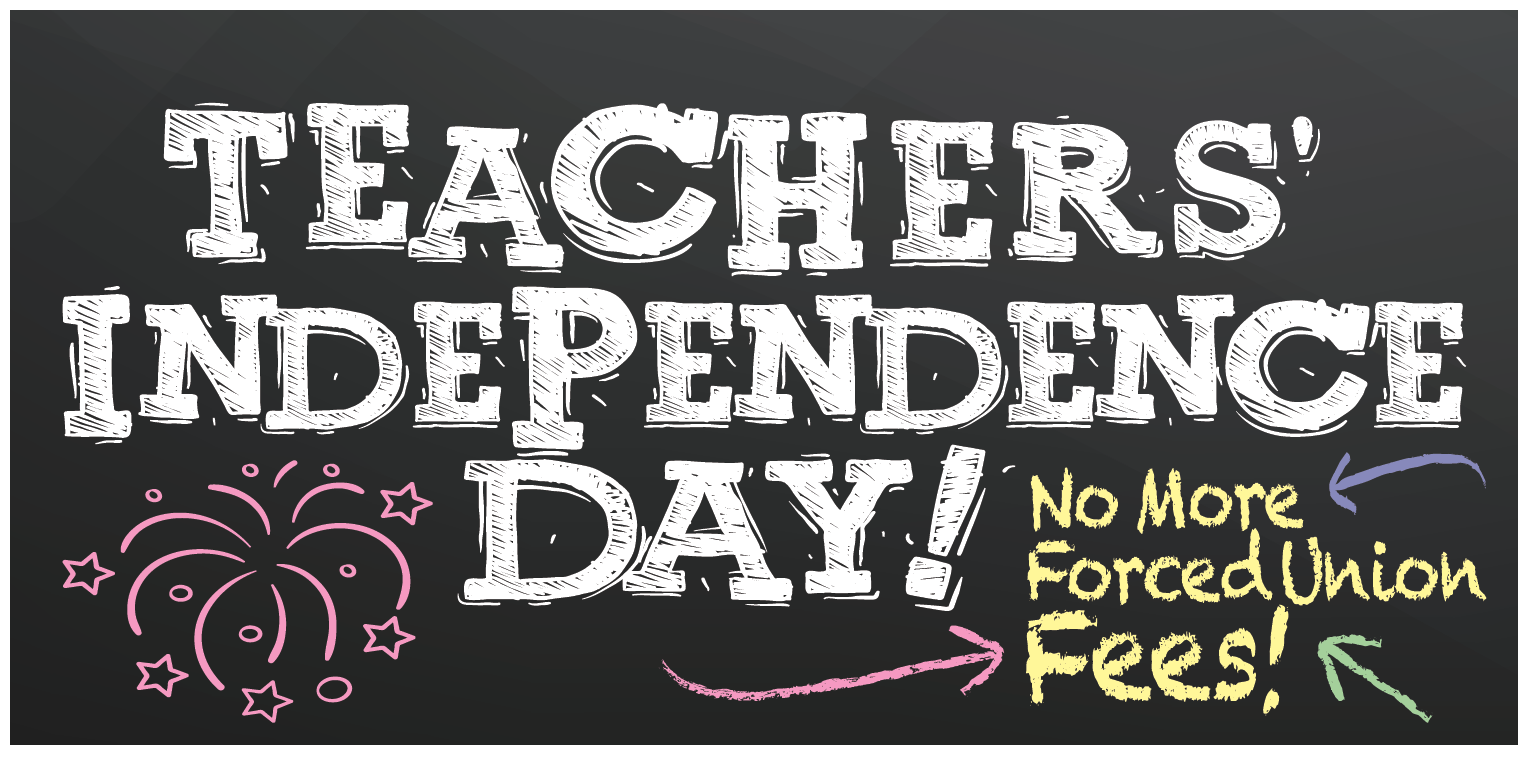
In a landmark decision for First Amendment rights, the U.S. Supreme Court today ruled that public employees cannot be compelled to pay union fees as a condition of employment. The 5-4 ruling in Janus v. AFSCME restores the First Amendment rights of freedom of association and free speech to more…

I was in my office again this morning waiting for the High Court to issue opinions starting at 10:00 AM EST; the Court did not release the Janus opinion this morning. We will, however, hear sometime this week.
I got a sweet note from Mark Janus this morning. He is…
Is NEA’s proposal to broaden the scope of who can have union membership a safety net for its political power? Does the union fear its members will assess its representation and find it wanting?

The reality of violence directed against K-12 educators by students is highly concerning. For too many teachers, violence while on the job is prevalent, ranging from threats of physical violence to actual assault or physical abuse.

One reoccurring criticism of teachers’ unions is that they protect “bad” teachers—those “how are you still here?” teachers. But do teachers themselves share this same perception? According to a recent poll, they do. Teacher quality is a vital determinant of student achievement. There is a way to keep good teachers and remove inadequate ones. But the status quo needs to change first. And teachers are calling out the union for getting in the way.

Teachers were celebrated last week during National Teacher Appreciation Week. But even though the five days of nationally honoring educators has come and gone, teachers can and should continue to be recognized and supported outside the second week of May. In order to acknowledge what they really need—and deserve—we need to listen to their voices and restore respect for their choices.

The pension bill, which Gov. Mark Dayton supports, is expected to become law though some lawmakers are stunned at the growing expense. Pensions are supposed to be covered by employer and employee contributions that are then invested by the state, but Minnesota stopped paying the full cost of pensions in the early 2000s. Imagine if you did that with your mortgage and then tried to catch up to avoid foreclosure.

Minnesota secondary teachers have an average wage of $62,590 plus benefits. (Average annual wages for secondary school teachers, except special and career/technical education, May 2017.)