
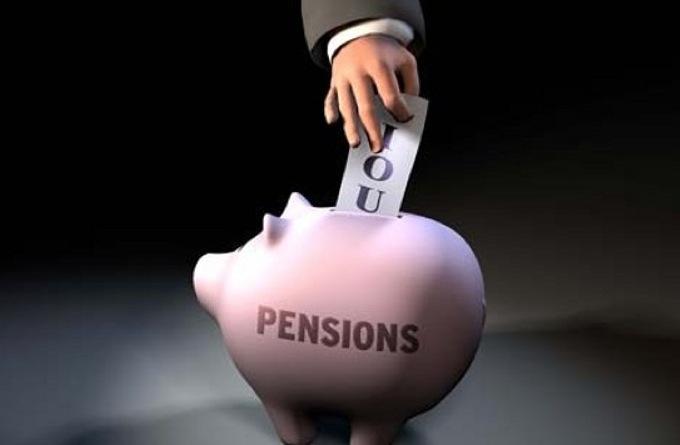
For newly retired Minnesota teachers, the “average pension” from the past ten years is $27,593.21, according to TeacherPensions.org, a project of Bellwether Education Partners.
But the estimated percentage of new teachers who will actually receive a pension is 50 percent. Which means 50 percent of new Minnesota…

Remember as the 7-day window comes to a close this weekend: the U.S. Supreme Court said in Janus that this is your choice. If you resign, you do not have to fund the union with fair-share fees or any other fees. But, again, you can voluntarily support your local without becoming a member. It is up to the local whether to accept your gracious gesture.

Minnesota teachers who are choosing to exercise their First Amendment rights and resign from union membership are being told they need to meet with their local union official before they can opt-out. This meeting is not required under the law, teacher contract, or under the union membership card.
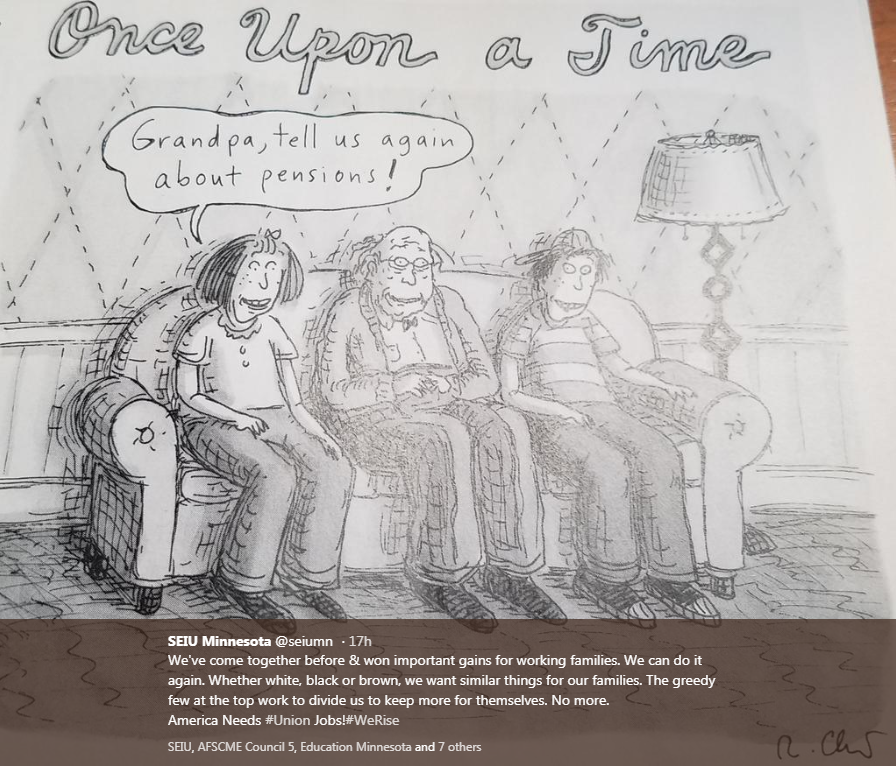
Minnesota’s unfunded public pension obligations are not a new problem. And reform is difficult when government unions oppose necessary steps to fix the broken system and refuse to consider savings options that offer real retirement security for employees. If the TRA pension fund is not appropriately reformed, Minnesota educators may not get the retirement benefit they have been promised.

We are pleased that the paper reported that rating agencies continue to warn Minnesota that it has much more work to do on pensions, and that if it does not reform pensions, Minnesotans will pay more to borrow money for building schools and building roads. But it would be better if reporters did not rely on biased sources for articles, especially union officials and politicians who cut the deal.
The pension bill, which Gov. Mark Dayton supports, is expected to become law though some lawmakers are stunned at the growing expense. Pensions are supposed to be covered by employer and employee contributions that are then invested by the state, but Minnesota stopped paying the full cost of pensions in the early 2000s. Imagine if you did that with your mortgage and then tried to catch up to avoid foreclosure.